
Two vitamins your food almost certainly isn’t covering
One you can barely eat. One you can’t make. Both dissolve under your tongue in seconds — no water, no swallowing.

Vitamin D3
5,000IU
Cholecalciferol · 625% DV
You can’t eat your way to it. Vitamin D occurs naturally in very few foods. The main source is sunlight on skin — which most people get far less of than they assume.
Vitamin B12
2,500mcg
Methylcobalamin · active form
Your body can’t make it. B12 comes almost entirely from animal-source foods. Eat fewer of them — for any reason — and intake falls with them.
Two nutrients, two completely different reasons people run short.
Why sublingual
It dissolves. You don’t swallow anything.
Most vitamins are a tablet and a glass of water. These sit under your tongue for a few seconds and are gone.
Dissolves in seconds
Sublingual tablets, lightly flavoured. Place one under the tongue and it’s gone.
No water needed
Nothing to swallow, nothing to chase. Works in the car, at a desk, mid-walk.
Highly bioavailable
Methylcobalamin — the active form of B12 — in a format built to be absorbed.
Energy, mood & bone support*
The three things B12 and D3 are best understood for.
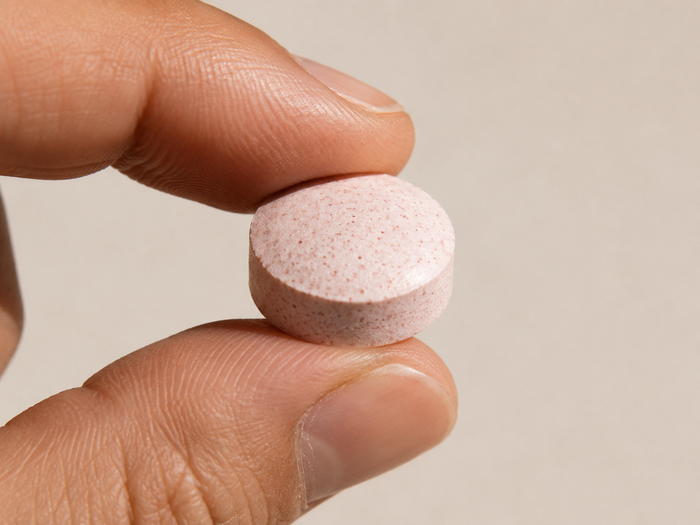
Place it under your tongue
One tablet, morning and evening.
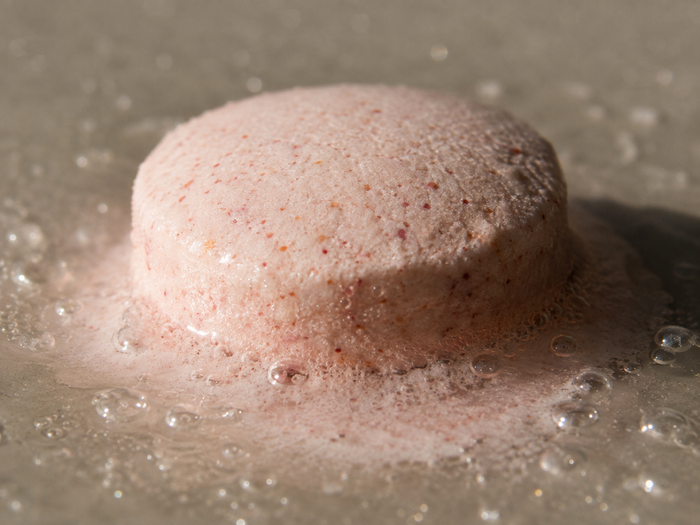
It dissolves
A few seconds. Lightly flavoured, no chalk.
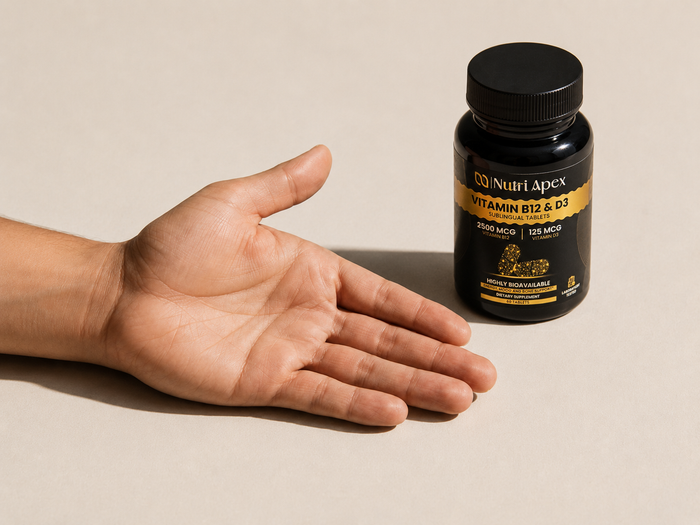
That’s the whole routine
No glass, no aftertaste, thirty seconds a day.
Two routes
Where a tablet actually goes
A sublingual tablet and a swallowed one take different paths. That’s what the format means.
- ~30sTo dissolve
- 0Glasses of water
- 2Tablets a day
- 60Per bottle
Under the tongueGone in seconds
Sublingual tablet
Two stopsSwallowed tablet
Four stops
One bottle.
One month.
60 tablets · 30-day supply
- Format Sublingual — dissolves under the tongue, no water
- D3 5,000 IU cholecalciferol (125 mcg)
- B12 2,500 mcg methylcobalamin — the active form
- Dose One tablet, twice a day
- Tested Mérieux NutriSciences, third party
Where they come from
Two different problems
Most vitamins have one story: eat more of a certain food. These two don’t.
D3 comes from light
Very few foods contain meaningful vitamin D. Skin makes it from sunlight — when the sun is high enough, and when skin is actually exposed to it.
B12 comes from animals
B12 is made by bacteria and reaches us almost entirely through animal-source foods. Plants contain essentially none.

You can’t eat sunlight.
Half the year, the angle is wrong
Across much of the continental United States, the sun sits too low through the winter months for skin to make much vitamin D — regardless of how long you stand in it.
Then there’s the other half of it
Even in the months when the sun is high enough, the average American spends around 90% of their time indoors. The daylight arrives; most of us aren’t standing in it.
Many multivitamins carry a token amount
Vitamin D is cheap, so it isn’t cost that keeps doses low — it’s that a multivitamin is trying to fit forty things into one tablet.
Not all B12 on a label is the same
Most supplements use cyanocobalamin — stable, cheap, and the body has to convert it. We use methylcobalamin, the form already active in the body.
The word in brackets after the vitamin name is the part that matters.


Two tablets. Two problems solved.
Side by side
What to check on any B12 or D3 label
| What to check | Typical multivitamin | Basic D3 | Nutri Apex |
|---|---|---|---|
| Meaningful D3 dose | × | Sometimes | 5,000 IU |
| Active B12 form | × | — | Methylcobalamin |
| Dissolves without water | × | × | ✓ |
| Every dose printed | Sometimes | Sometimes | ✓ |
| No proprietary blend | × | Sometimes | ✓ |
| Named third-party lab | × | × | Mérieux |
Plainly
What this won’t do
It won’t tell you your levels — only a blood test does that, and it’s worth asking for one. It won’t fix tiredness that’s coming from sleep, stress, or something a doctor should look at.
What it does is close a gap that’s genuinely common, and cheap to close.
One bottle. One month.
60 tablets · 30-day supply
Skip, pause or cancel any time before your next order. Nobody will try to talk you out of it.